If you read my article about becoming a ‘time crunched Ironman’, you’ll know I’d enlisted the help of the coaches at SportsTest to take a rather more scientific approach to my training.
There were tests, masks, wires, callipers and considerably more data than I understood.
But for all the science involved, I could have told Garry the biggest improvement I needed to make before I walked through the door.
I needed to lose some weight.
Not six stone this time. I’ve already done that particular journey, which you can read about in my Ironman story, and I have absolutely no desire to do it again.
This was different.
I was training for an Ironman, I had a reasonable level of fitness and I wasn’t massively overweight. I was just carrying more of me around than I really needed to.
And unfortunately, when you’re cycling uphill, gravity doesn’t particularly care whether the extra weight arrived via expensive sports nutrition or biscuits.
So how do you lose weight without ruining your training?
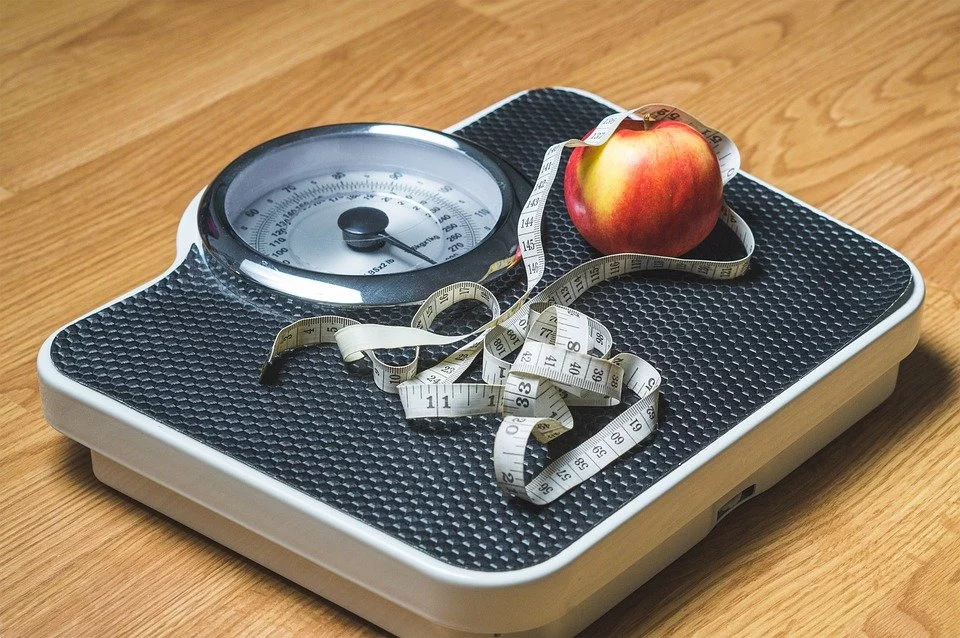
This is where weight loss for cyclists and triathletes gets slightly more complicated.
Losing weight itself isn’t particularly mysterious.
Over time, you need to consume fewer calories than you use.
That’s basically it.
Unfortunately, this is the point where the internet normally decides things aren’t complicated enough and introduces fasting windows, forbidden foods, metabolism hacks, powders, supplements and somebody on Instagram explaining that the real reason you’re overweight is because you’ve been eating breakfast at the wrong time.
I’ve tried enough approaches over the years to have reached a much less exciting conclusion.
The best diet is probably the one you can actually stick to.
For me, that means MyFitnessPal, a sensible calorie target and consistency.
Nothing more exotic than that.
The problem with trying too hard
This was probably the biggest lesson from losing a lot of weight the first time around.
It’s very tempting to decide that if a small calorie deficit works, a massive calorie deficit must work even better.
And technically, for a while, it probably will.
The problem is that you’re not just trying to lose weight. You’re also trying to swim, ride, run, recover, work and, ideally, remain a reasonably pleasant person to live with.
Cut your food too aggressively and everything becomes harder.
Training feels worse. Recovery suffers. You’re hungry all the time and you spend an increasingly unreasonable amount of your day thinking about food.
Then Friday arrives.
You’ve been incredibly “good” all week, you’re absolutely starving and suddenly the weekend becomes a nutritional hostage situation.
A takeaway on Friday. A few beers. Saturday becomes a write-off because you’ve already “failed”. Sunday isn’t much better because obviously the diet starts again on Monday.
I’ve done this.
More than once.
And four days of being extremely disciplined followed by three days of eating like you’re preparing for hibernation isn’t consistency.
So I stopped trying to win the diet
This time the approach was deliberately boring.
I used MyFitnessPal to keep track of what I was eating and set myself a calorie target that created a deficit without being so aggressive that I spent the entire day hungry.
That distinction matters.
The aim wasn’t to eat as little as possible.
It was to eat slightly less than I needed, consistently.
If you’re losing weight while training, you still need enough energy to do the training. You also need protein, carbohydrates and the rest of your diet to support recovery rather than simply chasing the lowest possible number on an app.
I wasn’t interested in winning Tuesday’s calorie deficit if it meant destroying Saturday’s long ride.
I wanted something I could repeat tomorrow.
And the day after that.
And, crucially, at the weekend.
Calories still matter
This is the slightly unfashionable bit because calorie counting isn’t particularly exciting.
But it gave me something useful: accountability.
It’s remarkably easy to convince yourself that you haven’t eaten very much.
Breakfast was healthy. Lunch was healthy. Dinner wasn’t too bad.
You just forget the handful of nuts, the children’s leftovers, the coffee, the snack while making dinner and the other snack you ate while deciding what snack you actually wanted.
None of these things are “bad”.
They just count.
Logging my food in MyFitnessPal meant I could see roughly what I was eating rather than relying on my apparently very optimistic memory.
It also meant I didn’t need to ban anything.
If I wanted something, I could have it. I just had to account for it.
That, for me, made the whole thing considerably easier to live with.
What about BMR?
Your basal metabolic rate, or BMR, is essentially the energy your body uses just keeping you alive.
Breathing, circulating blood, maintaining body temperature and all the other useful things your body continues doing while you’re sitting on the sofa watching television.
So even on a day when you do absolutely nothing, you’re still using a significant amount of energy.
SportsTest had already measured my body composition as part of my Ironman testing, which helped give us an idea of my energy requirements.
You don’t necessarily need a laboratory and a man with callipers to get started, though. A BMR calculator can give you an estimate based on things such as your age, height, weight and sex.
Cycling weight loss BMR calculator
The important word there is estimate.
Your BMR isn’t a magic number and neither is the calorie figure your Garmin, Apple Watch or cycling computer gives you after a ride.
They’re useful tools, but I wouldn’t treat any of them as permission to eat precisely 847 extra calories because your watch says you’ve burned 847 calories.
The real test is what happens over time.
If your weight is gradually moving in the direction you want, your training is going well and you feel reasonably human, you’re probably somewhere close.
If it isn’t, adjust.
How big should the calorie deficit be?
This is another area where I think it’s easy to get unnecessarily fixated on an exact number.
I originally worked around the idea of roughly a 500 calorie daily deficit. That’s often used as a simple starting point because, on paper at least, it should produce gradual rather than dramatic weight loss.
But I don’t think the clever bit is hitting exactly 500 calories every single day.
The clever bit is finding a modest deficit that you can sustain without compromising your training or spending your evenings staring into the fridge.
Some days you’ll eat more.
Some days you’ll eat less.
A long training day obviously isn’t the same as sitting at a desk all day.
What mattered to me was the overall trend.
I wanted my weight gradually coming down while my ability to train stayed intact.
If either of those things stopped happening, something needed adjusting.
Consistency beats the perfect diet
This is probably the least exciting weight-loss advice you’ll ever read.
There was no detox.
No forbidden food group.
No 30-day transformation.
No special cycling diet.
I logged what I ate in MyFitnessPal, aimed for a sensible calorie deficit, tried to eat reasonably well and made sure I was fuelling the training that actually mattered.
Most importantly, I tried to do roughly the same thing seven days a week.
That last bit made more difference to me than almost anything else.
I’d much rather have a slightly smaller calorie deficit Monday to Sunday than spend Monday to Friday restricting myself so heavily that by Saturday evening I’m three pints into a curry and telling myself I’ll start again next week.
Because I’ve done that version too.
It doesn’t work particularly well.
There isn’t a magic bullet
The slightly depressing conclusion to most things I’ve learned through endurance sport is that the boring answer is usually the right one.
Want to get fitter?
Train consistently.
Want to get faster?
Train consistently.
Want to lose some excess weight?
Eat a little less than you need, do it consistently and give it time.
Obviously nutrition can become much more sophisticated than that, particularly if you’re training at a high level. But for somebody like me trying to get lighter without wrecking the training I’d spent so much time planning, simplicity was a strength rather than a weakness.
I didn’t need the fastest possible weight loss.
I needed weight loss I could maintain.
Because the objective wasn’t to produce an impressive number on the scales one Friday morning.
It was to arrive at the start line in Frankfurt lighter, properly fuelled and fit enough to actually race.
That’s a rather different thing.
If you’re trying to work out what a sensible target might look like, you can also read our guide to calculating your ideal race weight.
Taking your training a little more seriously?
Our Triathlon Insurance can cover your bikes and equipment while you concentrate on the swimming, cycling, running and, apparently, logging everything you eat.