Do you trust the labels on the food and drink you buy at the local supermarket? How about the sports recovery drink you pay a premium for? Or the protein bar you chow down on the train back from a long weekend cycle?
If the answer is “not much”, then you’re not alone: one in three of us are apparently less trusting of products and retailers than we were five years ago.
The discovery of horsemeat in everything from burgers to lasagnes was never going to be forgotten overnight, so it’s hardly surprising that processed food and red meat top the list of products that aren’t what they claim to be. But third on that list are supplements.
Muscle milks, protein bars and energy gels, pre-exercise, during exercise, or post-exercise, weight loss, weight gain – you name it there’s a product out there purporting to be exactly what you need, and in some cases all of the above (and more: the recovery drink that, according to the images on the carton aids those who have just done an epic cycle and/or an intense session playing the saxophone, springs to mind).
One in four of us now guzzles and gorges on sports nutrition products, and amongst 16 to 24 year old men it’s more than four in 10. Most are keen exercisers with a household income in excess of £50,000, who won’t sniff at paying £2 for a drink that you could easily make at home with some water, sugar and salt (check this out).
I’m not suggesting these people have more money than sense, merely wondering whether we’ve all (yes, including me) been hoodwinked into thinking we need these supplements to our diets? (And not just those of us who exercise, either – even Mars bars come with an additional protein fix nowadays).
I was therefore surprised and relived to hear Dr Howard Hurst’s advice in a blog for YellowJersey last month. When asked whether there were three supplements amateur ‘weekend cyclists’ just couldn’t do without, he said: “If you are only riding at weekend then unless you’ve been diagnosed with a deficiency there is no real need to supplement if you have your nutrition sorted. I always advocate a food first approach.”
That sounds nice and straightforward. Of course, that doesn’t mean taking something will do any harm. It’s just that some of the products might not do exactly what is claimed on the tin. Does that mean we’re being deceived?
Not really. Howard mentioned that a recovery drink can be ideal on that train journey back from the hills for example when there’s nothing else to hand and you’re too cold to stop at the local café for lunch. The premium is the price you pay for convenience.
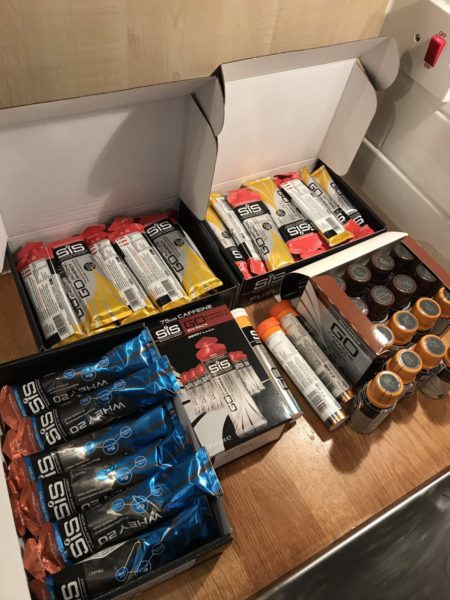
And whilst marketers may use some artistic licence now and again, there are some pretty strict (European) laws on what brands can and can’t put on their labels. Indeed, many products will tell you exactly when to consume and how much (though I’m yet to meet someone who can happily stomach energy gels at the suggested frequency).
Still, it’s worth keeping an eye on the labels because in case you didn’t know the rules have changed. Here’s how Mark Jones, a food and drink expert at Gordons solicitors explained it to me:
“Before July 2016, sports food was classified as ‘food intended for particular nutritional uses’. Being classified in that way meant there was a legal requirement to make the food suitable for its advertised/intended use. [But] the law has changed, [and] sport food is now regulated in the same way as any other food.” This means, for example, that sports products making claims like ‘high in protein’ have to hit certain levels.
That seems a sensible idea, but the big sports food industry associations aren’t happy. They say that comparing the products their members make with “normal food” is like comparing apples and pears. For example, they contain vitamins, minerals, proteins, amino acids and so on in quantities you only need when throttling it on the turbo trainer, for example. You can’t have any Tom, Dick or Harry buying them and eating it whilst watching the Tour de France on the sofa.
Aurélie Perrichet, executive director at Specialised Nutrition Europe told me that everyone has been left confused by the changes. She said some brands are already removing some of the useful information from their bottles and packets for fear they’ll fall foul on the general food regulations and the complicated rules on making health claims, for example. She wants specific laws for sports foods, but Jones can’t see that happeneing anytime soon given that the products – albeit increasingly popular – are still a very small part of the market.
Of course, with Brexit this may all become irrelevant anyway but the golden rule is to pay attention to the label. If it doesn’t tell you how to take the product, then check the company’s website or buy one that does.
It’s hard to keep up with all the latest advice (let alone the food labelling) laws and there’s always a new wonder product on the market that’ll “give you the edge”. Take the claims with a pinch of salt. And if you have any concerns at all about what you should and shouldn’t be eating when training, then seek some professional advice or keeping reading the experts on the YellowJersey blog.